COMMUNITY
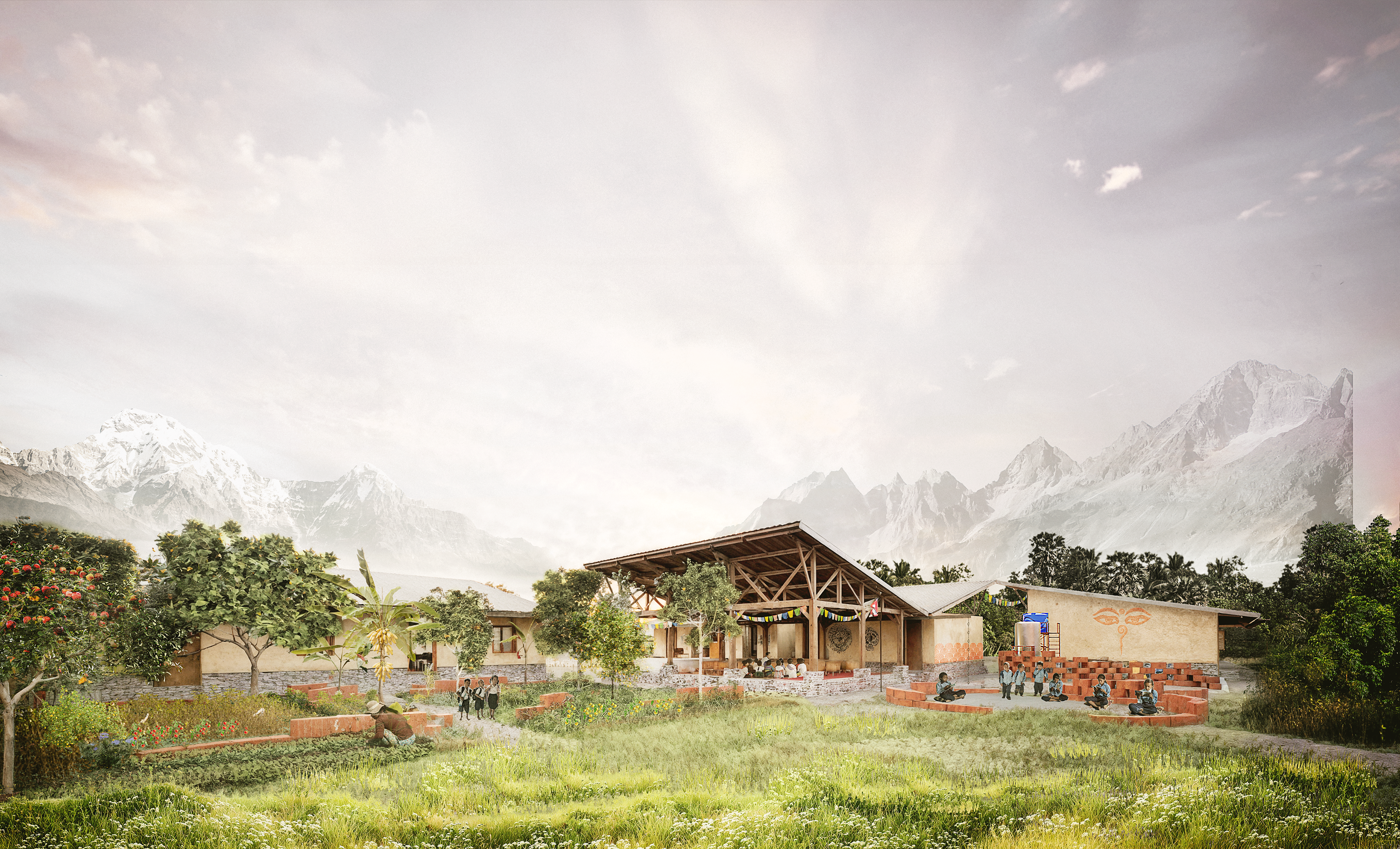
A school is more than just a place of education. It can be a community hub, craft center, even an artistic site. But above all, it is a solid ground when everything else fails. To this aim, Aasha is envisioned as a durable and resilient solution, designed not only to withstand environmental challenges but also to be easily replicated across communities.
A school is more than just a place of education. It can be a community hub, craft center, even an artistic site. But above all, it is a solid ground when everything else fails. To this aim, Aasha is envisioned as a durable and resilient solution, designed not only to withstand environmental challenges but also to be easily replicated across communities.
Central to this vision is the idea that a safe, resilient school lays the foundation for a better life, beginning with access to clean water and education through accessible, cost-effective solutions.
DESIGN
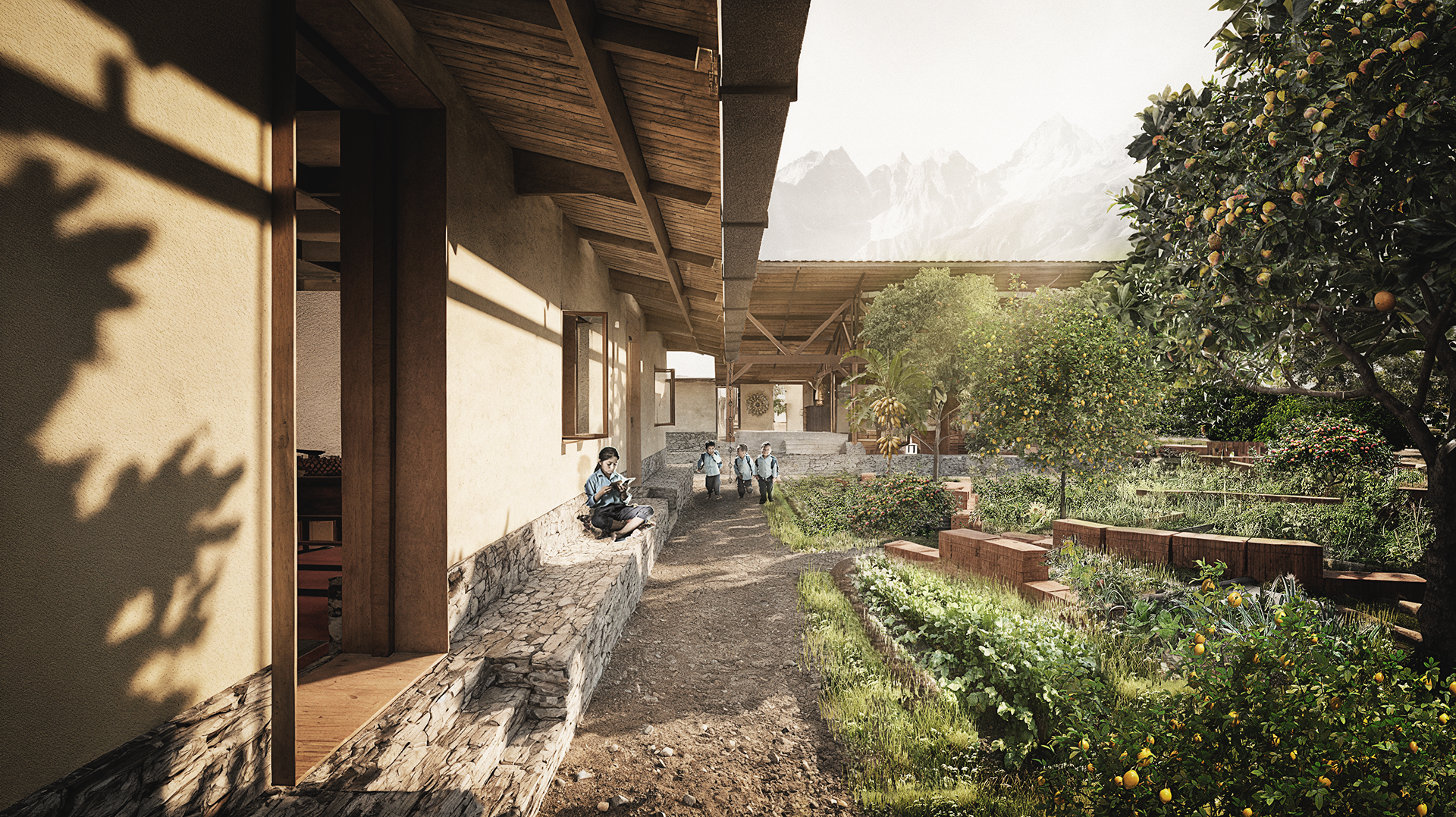
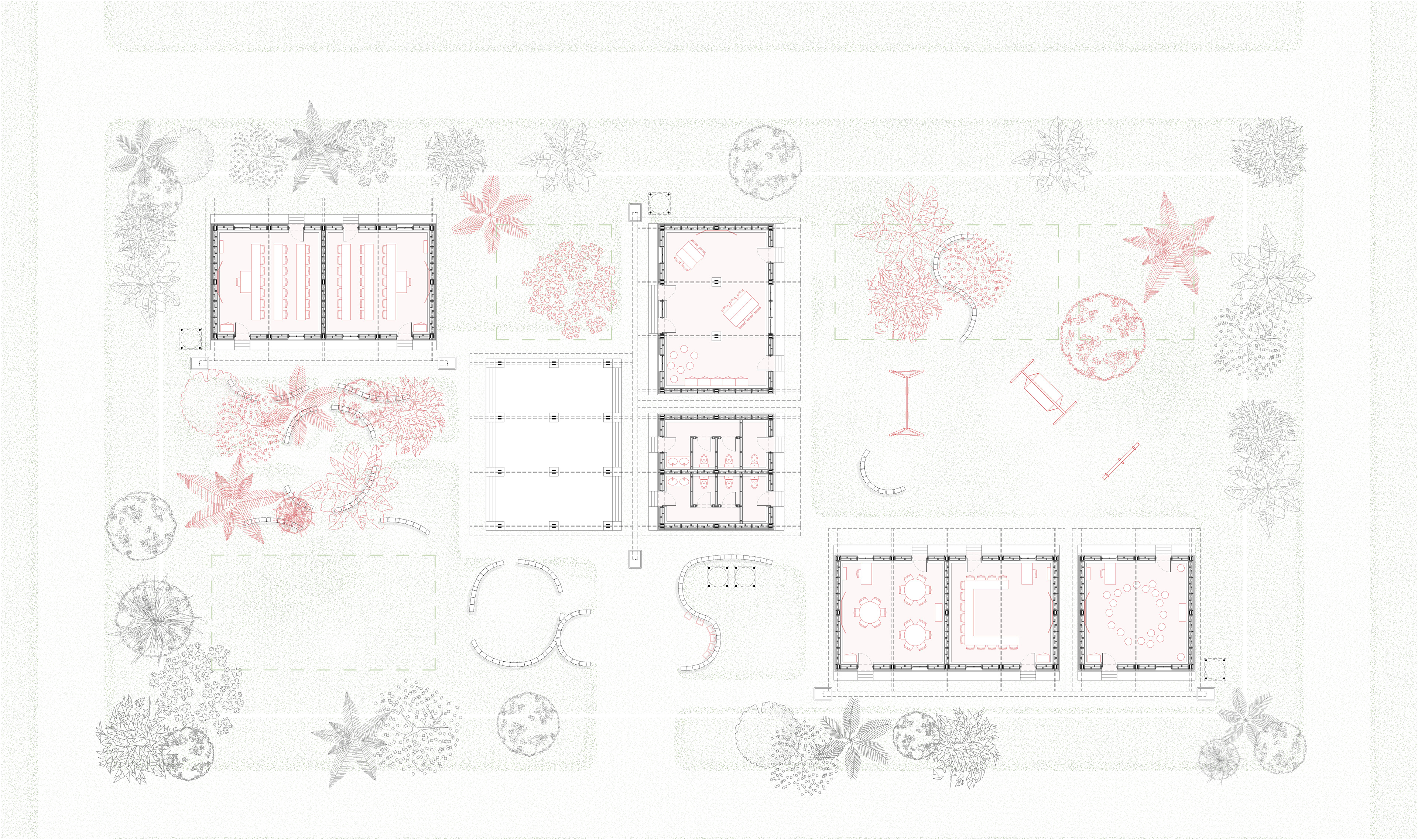
The masterplan divides the site into focus areas, adaptable to different plots. Common functions are placed at the heart, embraced by two arms of classrooms. Learning spaces are organized into two zones: classrooms by the playground emphasize recreation’s role in learning, while those facing the orchard encourage hands-on education. The orchard, planted with native species, supports biodiversity and ecological learning. Future additions could include a library by the playground and a beehive within the orchard.
The masterplan divides the site into focus areas, adaptable to different plots. Common functions are placed at the heart, embraced by two arms of classrooms. Learning spaces are organized into two zones: classrooms by the playground emphasize recreation’s role in learning, while those facing the orchard encourage hands-on education. The orchard, planted with native species, supports biodiversity and ecological learning. Future additions could include a library by the playground and a beehive within the orchard.
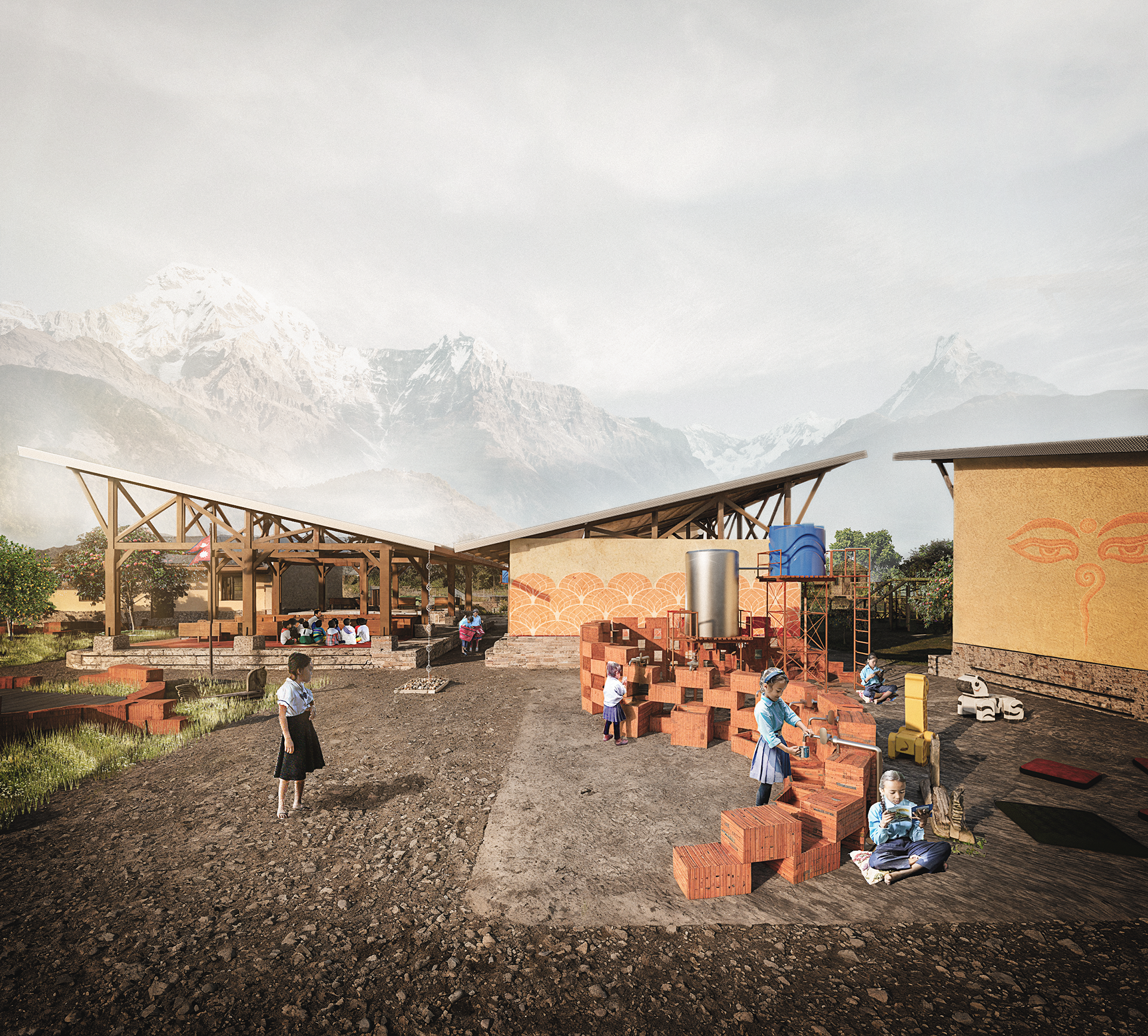
Within the common spaces, a low brick Jaali wall serves both symbolism and utility. Its undulating form suggests flowing water and reveals the filtration system behind it, providing clean drinking water through integrated faucets. Made from local bricks, it is simple to construct and offers comfort and shade, where children can play, lean, or study—turning infrastructure into part of daily life. Water, architecture, and joy come together, expressing resilience through lived experience.
While the school can access existing utility networks, passive systems reduce dependency. Wastewater is treated via an enclosed Anaerobic Baffled Reactor and a vertical flow constructed wetland, creating a hygienic, low-maintenance system that also irrigates the orchard and teaches water cycles.
ADAPTABILITY
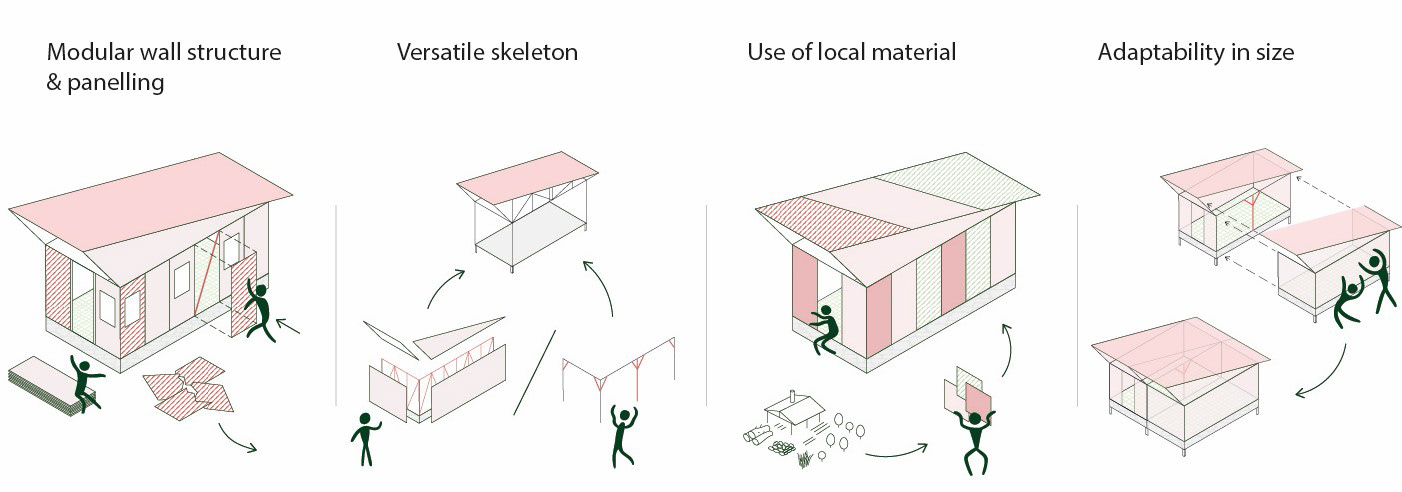
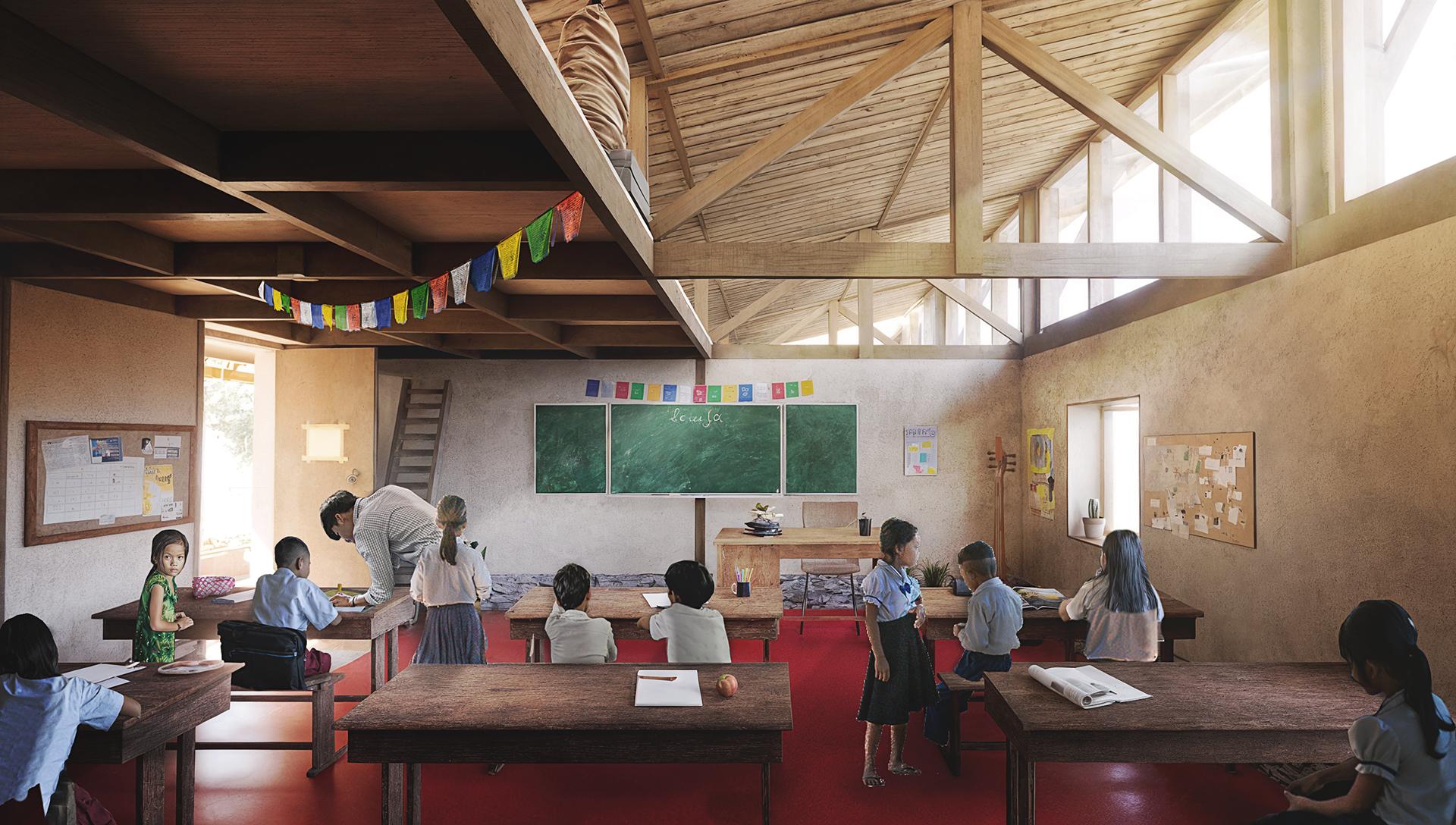
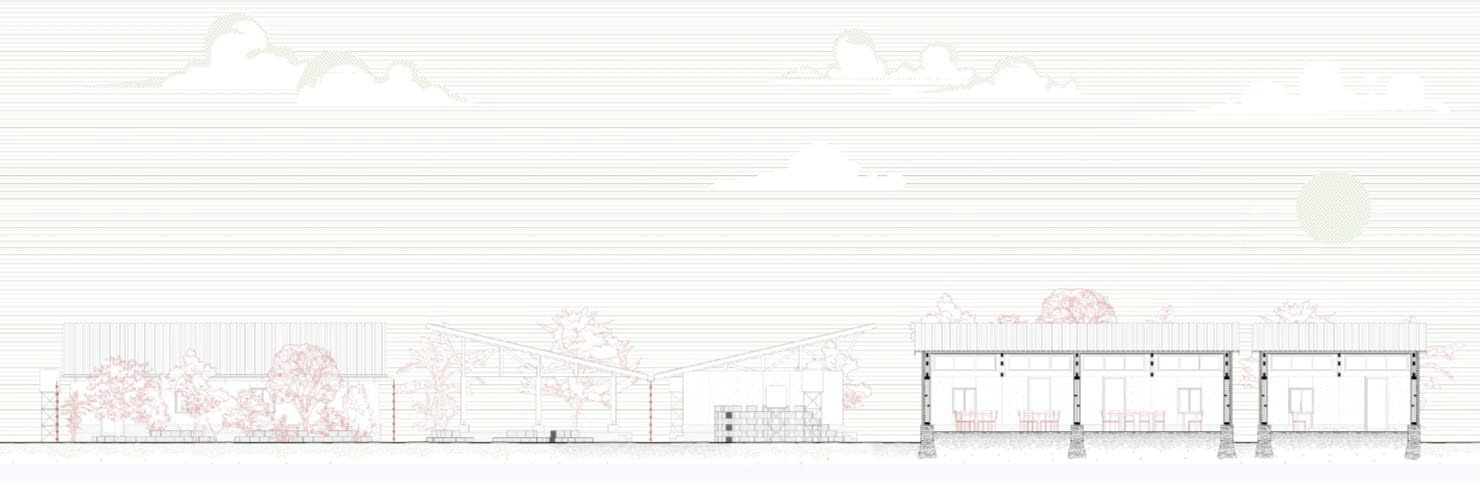
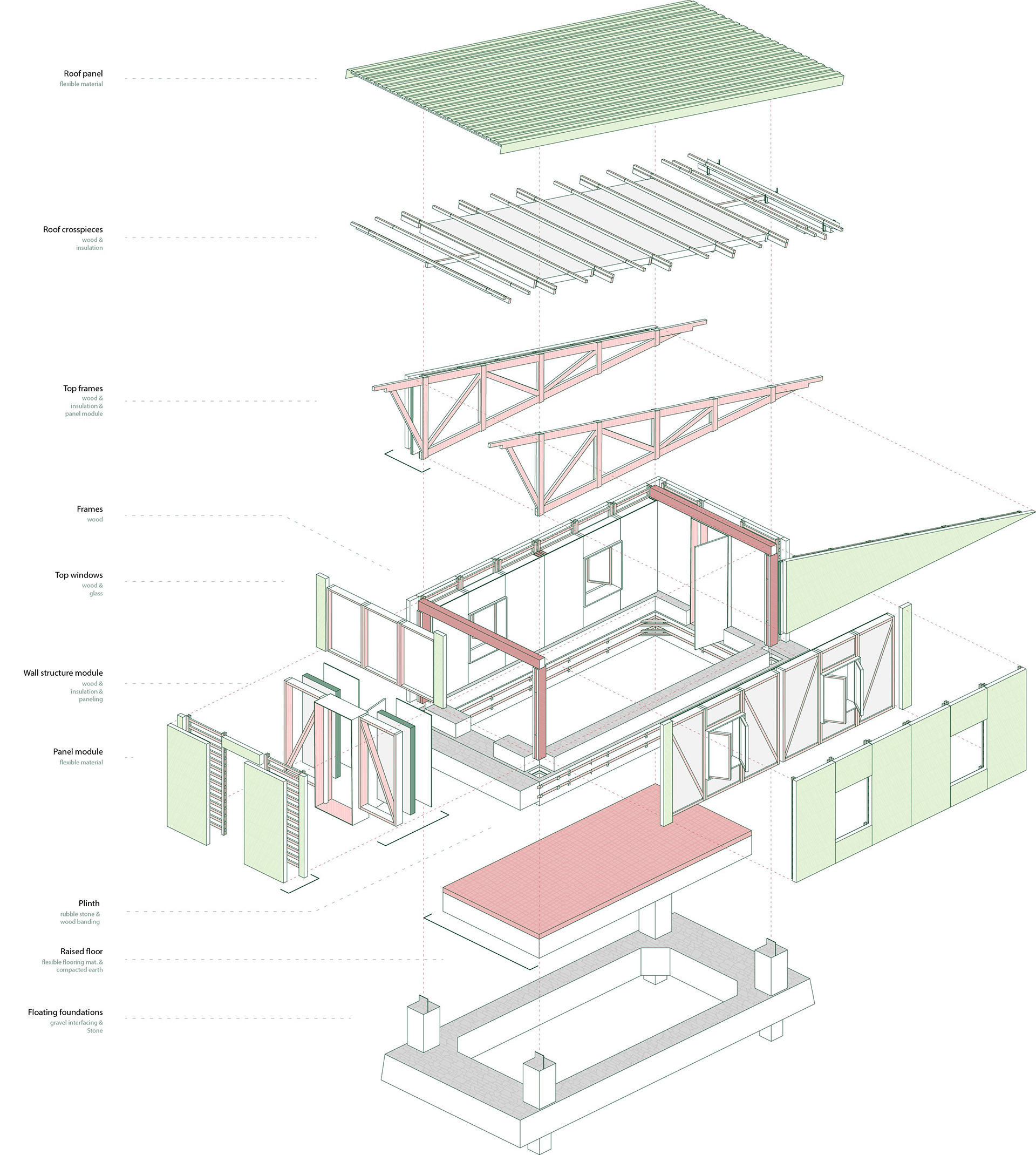
Resilience begins with design choices. Aasha is easy to build, repair, and adapt. Its structure is suitable for various local materials and techniques, either vernacular or reclaimed. It can fit different environments, terrains and budgets while still integrating seamlessly into its context. A school that is “owned” by its community becomes a shared and enduring asset.
Resilience begins with design choices. Aasha is easy to build, repair, and adapt. Its structure is suitable for various local materials and techniques, either vernacular or reclaimed. It can fit different environments, terrains and budgets while still integrating seamlessly into its context. A school that is “owned” by its community becomes a shared and enduring asset.